
A thoughtful garden makeover starts with what is already working: a sheltered seat, a healthy hedge, paving with character or a tree that gives welcome shade. Assess those features before drawing a replacement layout. Keep what serves your household, reuse sound materials where they suit the design, and replace the parts that are unsafe, failing or preventing the garden from working.
This approach gives the project a clear brief. Instead of asking for everything to be cleared, you can explain which problems need solving and which qualities you want to preserve.
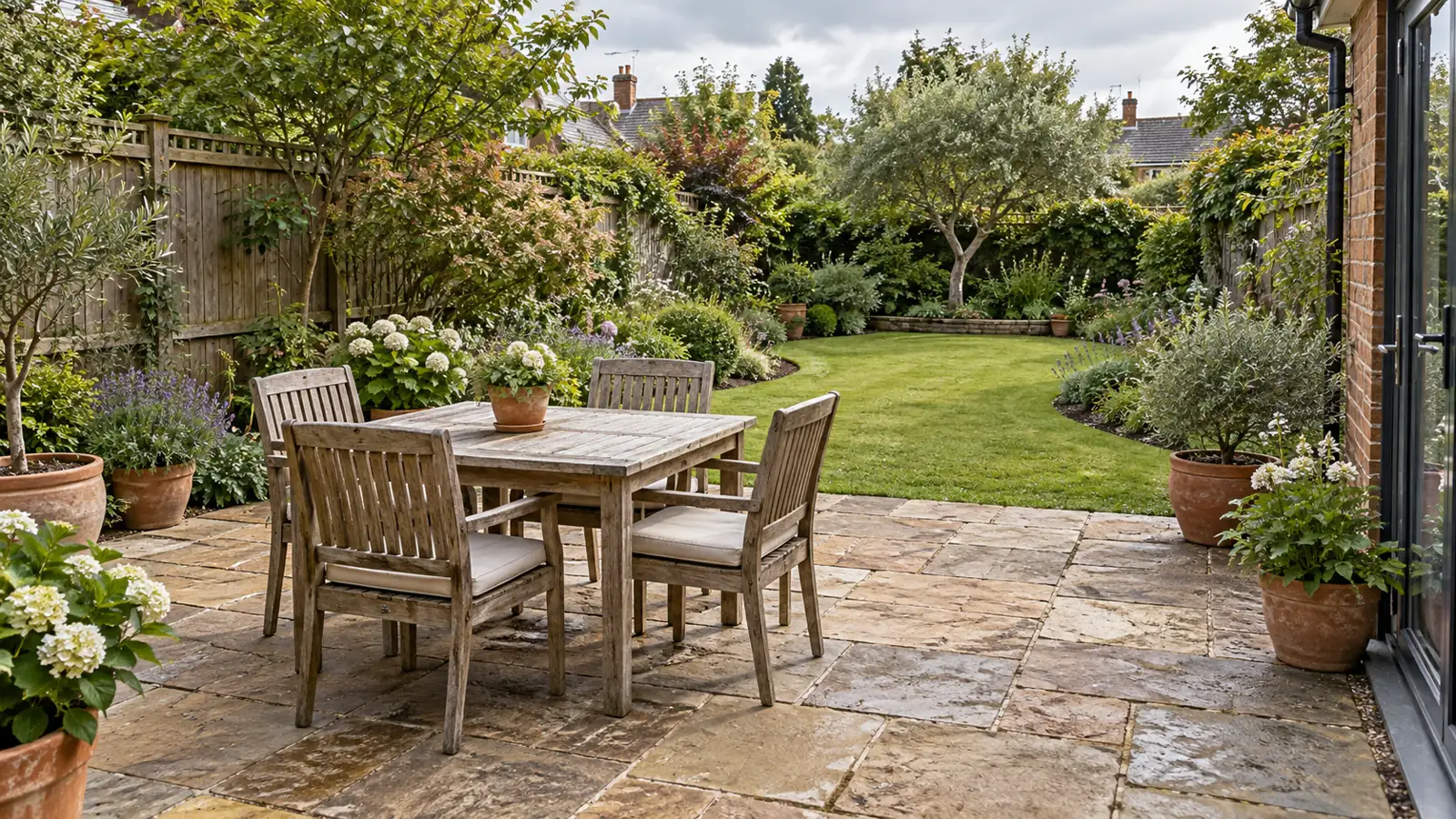
Featured image: AI-generated illustration of a possible garden makeover using established planting and weathered paving.
Start your garden makeover with an assessment
Walk around the garden at the times you actually use it. Notice where you can sit comfortably, which route you take to the shed and whether opening the back door creates a bottleneck. Look outside after rain too: a handsome terrace is less useful if water collects beside the house.
Make a simple record of the current features, their condition and their purpose. A fence may look dated but still provide the privacy you need. A neatly paved corner may never catch the evening sun. Appearance and usefulness deserve separate judgements.
If you have recently moved in, leave room for discoveries. The RHS advice on changing an established garden recommends observing how it behaves through the year before making sweeping changes. An apparently empty border may contain seasonal plants.
Record three priorities in plain language, such as “room to pull chairs out”, “a dry route to the garage” and “keep the neighbour screening”. These are more useful starting points than a long list of finishes.
What to keep, reuse and replace
Give each feature a provisional decision, with an “ask the contractor” note where its condition is uncertain. Retaining an item in place and lifting it for reuse are different jobs; the quotation should distinguish them.
| Feature | Keep or reuse when… | Investigate replacement when… |
|---|---|---|
| Patio and paths | The surface is sound, comfortable to use and in a useful position. | Slabs move, water pools or the route conflicts with daily use. |
| Trees, shrubs and hedges | They are healthy, suitable for the space and provide valued shelter or screening. | Health, mature size or the proposed construction needs specialist assessment. |
| Lawn | It suits the light, wear and upkeep you can provide. | Persistent poor growth or wet patches need diagnosis before a new surface is chosen. |
| Fences and screens | Posts and panels are sound and the screening works. | Components are loose, rotten or unsuitable for the intended use. |
| Pots, edging and furniture | They remain serviceable and fit the new arrangement. | Damage, awkward dimensions or maintenance demands make them impractical. |
The table is a planning aid. It cannot establish whether a retaining wall, tree, deck or paved base is safe to retain. Ask the appropriate professional to inspect anything that carries loads, supports a change in level or shows signs of movement.
Keep the planting that gives the garden character
Before removing a large shrub, look at the view behind it. Its most valuable role may be screening a nearby window or softening a fence. Replacing that cover with small new plants can change how exposed a seating area feels.
Photograph plants you value and mark them on the plan. Include the space around them that needs protecting during construction, then ask the contractor how access, storage and excavation will be managed. A note saying “retain tree” leaves too much unresolved if the proposed terrace reaches its roots.
Moving a mature plant deserves a separate decision. The RHS guidance on moving trees and shrubs explains that established specimens can struggle after transplanting and recommends considering specialist help for mature plants. Ask about suitability, timing and aftercare before designing around a successful move.
A garden can feel refreshed through selective changes to the surrounding borders, pots and furniture. Identify plants before pruning or removal, and obtain specialist advice where their condition or the proposed work is uncertain.
Assess old paving and materials before ordering new
Separate the condition of a material from the condition of its installation. Sound stone may be worth lifting and relaying even when the present patio is uneven. Conversely, attractive slabs cannot compensate for an unsuitable base or an unresolved water problem.
Ask a contractor to assess the proposed reuse, including lifting, cleaning, sorting, storage and breakages. Record how much usable material is likely to remain. Reclaimed paving may vary in thickness and colour, so the laying method and finished appearance need agreement.
If there is too little matching stone for a larger terrace, consider using it in a smaller, clearly defined area. A deliberate change in material can look more coherent than trying to disguise a near match. Check the intended furniture arrangement against our patio layout ideas before deciding how much paving you need.
Apply the same judgement to fences, edging and pots. A sound boundary may benefit from a refreshed finish, while a failing post needs attention before new planting conceals it. Avoid saving an item solely because it is already there if it compromises the finished garden.
Protect the ground you intend to keep
Access and storage need planning even for a modest makeover. Ask where machinery will travel, where lifted materials will wait and how retained lawn and borders will be protected. Include access to inspection covers and the outdoor tap.
The RHS guide to new-build gardens describes how construction traffic and buried debris can leave poor growing conditions. That is a useful reason to discuss ground protection and reinstatement before work starts.
Where water already lingers, request an assessment of the cause before agreeing to returf or pave the area. Give the contractor photographs taken after rain and explain how long the problem lasts. The surface choice should follow that assessment.
How to prepare a keep, reuse and replace brief
You will need a tape measure, paper, a pencil and a phone camera. This is a preparation exercise for discussing the project with a professional; it does not involve lifting paving, digging near services or assessing structural safety.
- Draw the existing garden. Sketch the house, boundaries, paths, planting, lawn and visible covers. Add rough dimensions and note any measurements that need checking.
- Photograph the features. Take an overall view and close views of items you hope to retain, along with visible defects and wet areas.
- Assign a provisional decision. Mark each feature keep in place, lift for reuse, replace or inspect. Add a short reason so the contractor understands its value to you.
- Test the proposed changes. Set out furniture and mark proposed edges with movable pots or a hose. Check doors, chair movement and everyday routes without disturbing the ground.
- Request a written scope. Give each contractor the same sketch, photographs and priorities. Ask them to confirm protection, preparation, reuse allowances and what happens if an item cannot be saved.
Once you know what stays, our garden zoning ideas can help you arrange the remaining space around the way your household uses it.
Compare the work behind each garden makeover quote
A useful quotation names the retained features and explains how they will be treated. Look for separate descriptions of careful lifting, storage, preparation, new materials, waste removal and reinstatement. Reuse may reduce material purchases, but the labour involved can still be substantial.
Ask how much replacement material is allowed for and who approves extra work if the original paving breaks during lifting or an existing base proves unsuitable. Agree those decisions before they become urgent on site.
For example, a household might keep its healthy boundary hedge, retain a serviceable path and relay selected patio slabs around a new seating position. The brief would then focus on assessing the slabs and base, protecting the hedge and making the junctions between old and new work tidy. This is an illustrative project, not a completed customer case study.
If you are ready to discuss the work, My Gardening Prices can help you enquire about garden makeover specialists. It operates a matching service for independent contractors. Use your brief to discuss the actual garden, and check the contractor’s relevant work, insurance and written proposal before choosing a firm.
Frequently asked questions
Is reusing old paving always cheaper?
No. Lifting, cleaning, sorting and relaying can add labour, and some slabs may break. Ask for the reuse option and a suitable new-material option to be priced against the same finished layout.
Can a garden makeover leave the existing lawn in place?
Yes, if the lawn suits the design and can be protected during the work. Ask which areas need access or storage and whether the quotation includes repairing damage afterwards.
Should I remove plants before the contractor visits?
Leave valued plants in place for the assessment where practical. Photographs and labels help explain what matters to you, while the contractor can assess how the proposed work affects their retention.
What if there are too few matching slabs for a larger patio?
Ask about using the existing slabs in a smaller defined area, changing the layout or choosing a complementary material. Agree the pattern and junction details before ordering.
What should I do if I cannot identify an established plant?
Photograph its leaves, flowers and overall shape and seek identification before deciding to remove or prune it. Identification helps establish its likely size, care needs and suitability for the new garden.
Give the useful features a place in the new design
Start the contractor visit with your assessment and three main priorities. Agree what must stay, what needs inspection and where you are open to alternatives. That gives every new element a clear purpose and helps the finished garden retain the qualities you already enjoy.