
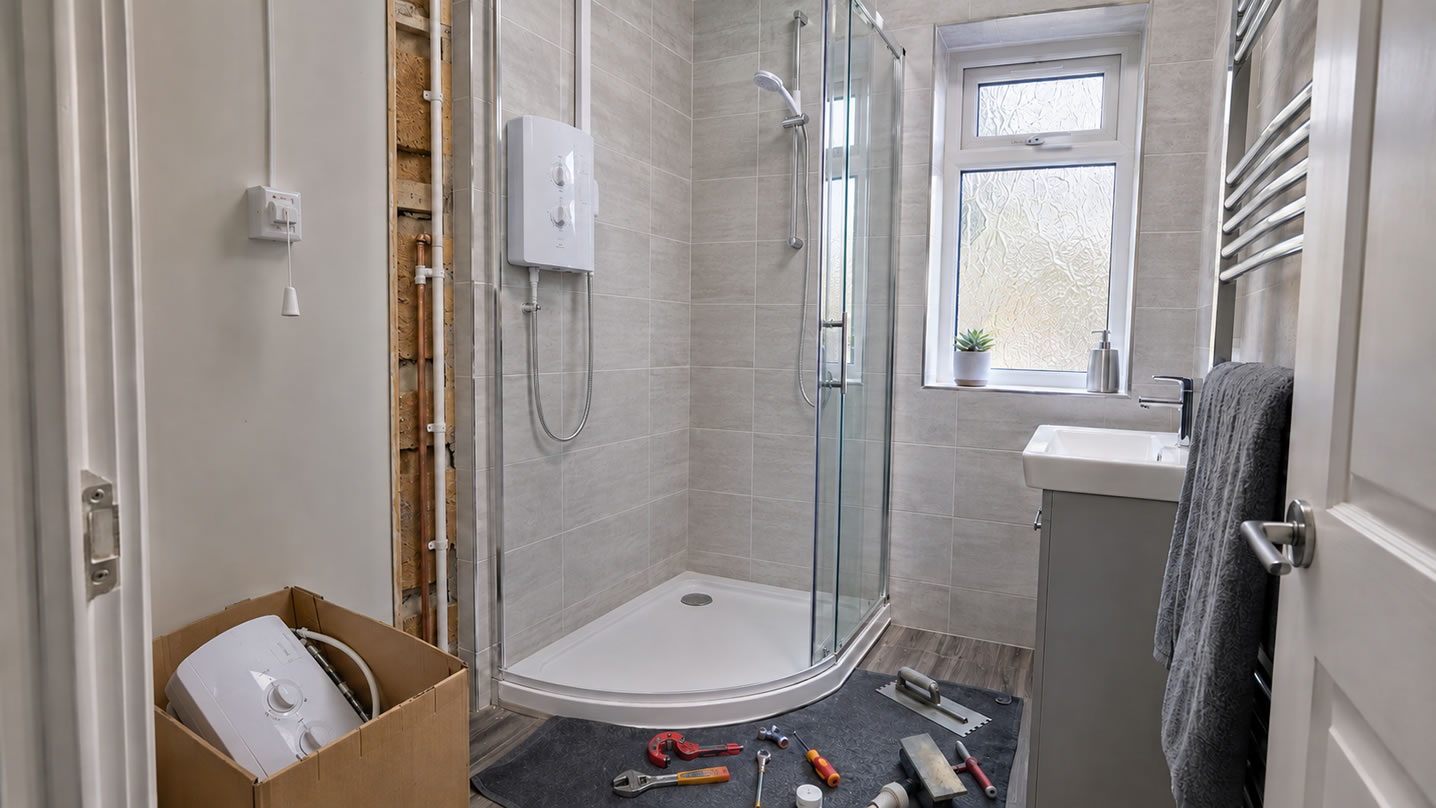
An electric shower can be a practical choice for a bathroom, ensuite or shower room because it heats cold mains water as you use it.
Unlike a mixer shower, it does not rely on stored hot water from a cylinder or hot water supplied by a combi boiler. Instead, electricity heats the water inside the shower unit.
That makes electric showers particularly useful in homes where:
- hot water pressure is limited
- several people use the bathroom
- you want a shower that still works if the boiler fails
- a new ensuite is being created
- there is only a cold water supply close to the shower position
However, fitting an electric shower is not simply a plumbing job.
Higher-powered showers draw a substantial electrical load, so the installer needs to check the cable size, dedicated circuit, protective devices and consumer unit before fitting the new shower.
As a broad UK guide, a straightforward replacement may cost around £250 to £500 including a standard shower unit, while a completely new installation can cost around £500 to £1,000 or more. Where a new electrical circuit, consumer-unit work, tiling or substantial plumbing alterations are needed, the cost can rise further.
This guide explains electric shower installation costs, common power ratings, water pressure, electrical requirements and what homeowners should compare when requesting quotes.
How Much Does Electric Shower Installation Cost?
Typical UK guide prices include:
| Electric Shower Job | Typical Cost |
|---|---|
| Labour for straightforward fitting | £150–£300 |
| Like-for-like replacement | £250–£500 |
| New standard electric shower installation | £400–£700 |
| New installation with electrical alterations | £500–£1,000+ |
| Complex installation | £800–£1,500+ |
| Basic electric shower unit | £80–£180 |
| Mid-range shower unit | £150–£300 |
| Premium shower unit | £300–£600+ |
The biggest difference is usually whether the property already has a suitable electrical supply.
Like-for-Like Electric Shower Replacement
Replacing an existing electric shower with a similar model is normally the cheapest option.
A straightforward job may involve:
- isolating the existing supply
- disconnecting the old shower
- fitting the replacement
- reconnecting the cold water feed
- reconnecting the electrical supply
- testing the installation
If the existing cable, circuit and plumbing are suitable, the work may only take a few hours.
A typical like-for-like replacement may cost around £250 to £500, including a basic or mid-range shower.
Installing an Electric Shower Where There Wasn’t One Before
A completely new installation is more involved.
The installer may need to provide:
- new cold water pipe
- dedicated electrical cable
- circuit protection
- isolator
- shower unit
- wall preparation
- testing and certification
The electrical cable may need to run from the consumer unit all the way to the bathroom.
That can involve lifting:
- floorboards
- carpets
- loft insulation
or routing cable through walls and cupboards.
Therefore, a new installation can cost around £500 to £1,000 or more.
What Does an Electric Shower Need?
A typical electric shower needs:
- mains cold water supply
- dedicated electrical circuit
- suitable cable
- RCD protection
- appropriate circuit breaker
- suitable isolation
- safe bathroom installation
The exact electrical specification depends heavily on the shower’s power rating and cable route.
Why Electric Showers Need Their Own Circuit
Electric showers use a large amount of electricity while operating.
A typical shower might be rated at:
- 7.5kW
- 8.5kW
- 9.0kW
- 9.5kW
- 10.5kW
This is far more power than an ordinary light or socket appliance uses.
Therefore, the shower should have a dedicated electrical circuit rather than sharing a normal socket circuit.
Electric Shower Power Ratings
Higher-powered showers can heat more water to a comfortable temperature.
Typical ratings include:
| Shower Rating | General Use |
| 7.5kW | Lower-powered older installations |
| 8.5kW | Common standard shower |
| 9.0kW | Good general-purpose option |
| 9.5kW | Stronger flow |
| 10.5kW | Higher-performance electric shower |
The best choice depends on:
- existing cable
- electrical supply
- water pressure
- desired flow rate
Do not simply replace an 8.5kW shower with a 10.5kW model without having the electrical circuit checked.
Is a 10.5kW Shower Better Than an 8.5kW Shower?
It can provide a better flow, particularly during colder weather.
An electric shower has to raise cold mains water to a comfortable showering temperature.
In winter, incoming water can be much colder.
A higher-powered unit can normally heat a greater volume of water at once.
Therefore, a 10.5kW shower may provide a stronger flow than an 8.5kW model under the same conditions.
However, it also places a larger demand on the electrical circuit.
Why Electric Showers Can Feel Weaker in Winter
Electric showers heat water instantly.
When the incoming mains water becomes colder during winter, the unit needs more energy to raise it to the selected temperature.
If the heating power remains the same, the shower may reduce the flow to maintain temperature.
This is normal.
It does not necessarily mean the shower is faulty.
Cable Size Matters
The electrical cable needs to be correctly sized for:
- shower power
- circuit length
- installation method
- surrounding insulation
- protective device
The correct cable cannot safely be selected from shower wattage alone.
For example, cable running:
- through loft insulation
- inside conduit
- over a long distance
may carry current differently from cable clipped directly to a wall.
Therefore, an electrician needs to assess the actual installation.
Existing Electric Shower Cable
If you already have an electric shower, the existing cable may be reusable.
However, the installer still needs to inspect it.
This is especially important if you are upgrading from something like:
- 7.5kW to 9.5kW
- 8.5kW to 10.5kW
A more powerful replacement may require:
- larger cable
- different breaker
- updated protection
Consumer Unit Checks
The electrician should check whether the consumer unit can safely support the shower.
Older homes may still have:
- old fuse boards
- outdated protective devices
- limited spare capacity
A new shower does not automatically mean you need a new consumer unit.
However, some older installations may need upgrading before a higher-powered shower can be fitted safely.
RCD Protection
RCD protection is particularly important in bathrooms.
An RCD quickly disconnects the electrical supply when it detects certain fault conditions.
Modern bathroom electrical circuits require suitable protection.
If an older shower circuit lacks appropriate RCD protection, this may need correcting during the installation.
Shower Isolation Switch
Electric showers normally have a separate means of isolation.
This may be:
- ceiling pull-cord switch
- suitable wall-mounted isolator outside the bathroom
The isolator allows the shower circuit to be switched off independently.
The electrician will determine the appropriate position and specification.
Pull-Cord Shower Switches
A ceiling-mounted pull switch is common in British bathrooms.
It keeps the electrical switch away from direct water contact.
Older switches can sometimes show signs of:
- overheating
- discolouration
- stiffness
- burning smell
If this happens, stop using the shower and arrange an electrical inspection.
Water Supply Requirements
Most electric showers connect directly to the mains cold water supply.
The water pressure and flow need to fall within the shower manufacturer’s operating range.
The installer should check this before fitting the unit.
Does an Electric Shower Need Hot Water?
No.
That is one of its main advantages.
The shower heats cold water internally.
Therefore, it can still produce hot water even if:
- the boiler is switched off
- the hot water cylinder is empty
- the central heating system has failed
You still need electricity and a working mains water supply.
Electric Shower vs Mixer Shower
| Feature | Electric Shower | Mixer Shower |
| Water supply | Cold mains | Hot and cold |
| Heats water itself | Yes | No |
| Boiler dependence | No | Usually |
| Flow rate | Moderate | Often stronger |
| Electrical circuit | Dedicated high-power circuit | Usually not |
| Installation complexity | Electrical + plumbing | Mainly plumbing |
| Backup if boiler fails | Yes | Usually no |
A mixer shower can provide a stronger flow where the hot water system performs well.
An electric shower provides useful independence from the boiler.
Electric Shower vs Power Shower
These are not the same thing.
Electric shower
Uses electricity to heat cold water.
Power shower
Uses stored hot and cold water and includes a pump to increase flow.
Power showers are usually suited to certain gravity-fed water systems.
An electric shower is often much simpler where only a cold mains feed is available.
Electric Shower vs Digital Shower
Digital showers use electronic controls to regulate hot and cold water from the home’s existing hot water system.
They can provide:
- precise temperature control
- remote controls
- app connectivity
- cleaner design
However, they usually cost significantly more.
An electric shower remains one of the simpler options.
Is an Electric Shower Good for a Combi Boiler Home?
Yes.
The electric shower operates independently from the combi boiler.
That can be useful because the shower does not compete for the boiler’s hot water.
For example, someone could potentially use the electric shower while hot water is being used elsewhere.
However, overall mains water pressure and flow still matter.
Electric Showers in Homes With Hot Water Cylinders
Electric showers can also work well in homes with:
- vented cylinders
- unvented cylinders
The shower does not draw hot water from the cylinder.
This can preserve stored hot water for:
- baths
- taps
- another bathroom
It can therefore be useful in larger households.
Electric Showers for Ensuites
An electric shower can be a practical option when creating a new ensuite.
The installer only needs to bring:
- cold mains water
- suitable electrical supply
to the shower.
This can sometimes avoid extending the hot water system into the new room.
However, the cost of installing the dedicated cable needs to be considered.
Electric Showers in Loft Conversions
A loft ensuite can also use an electric shower.
This may be attractive where hot water pipe runs would otherwise be long.
However, cable routing from the consumer unit to the top of the house can increase installation cost.
Water pressure should also be checked at loft level.
Low Water Pressure
Standard electric showers usually need a suitable mains pressure.
If pressure is too low, the shower may:
- shut down
- fluctuate
- produce weak flow
Special pumped electric showers exist for certain low-pressure systems.
However, they are different products and need the correct water supply arrangement.
Can an Electric Shower Work From a Water Tank?
A standard mains-fed electric shower generally expects cold mains water.
However, some specialist pumped electric showers can operate from a cold water storage tank.
The product needs to be selected specifically for that application.
Do not simply connect a standard mains shower to a tank supply.
Choosing the Right Shower Head
Electric showers normally come with a shower head designed to work with that unit.
The size and spray pattern affect flow resistance.
Replacing it with an unsuitable large rainfall head can reduce performance or interfere with the unit’s operation.
Use shower heads approved for the model.
Rainfall Heads and Electric Showers
Large rainfall heads are more common with mixer or digital showers.
An electric shower produces a more limited water flow.
Therefore, an oversized rainfall head may not give the experience homeowners expect.
Some higher-end electric showers include larger heads designed for their available flow rate.
Thermostatic Electric Showers
Some electric showers provide more advanced temperature stabilisation.
These can help maintain a more consistent shower temperature when:
- water pressure changes
- another tap is opened
They tend to cost more than basic models.
Electric Shower Unit Prices
Typical unit prices are approximately:
| Shower Type | Typical Unit Price |
| Budget electric shower | £80–£150 |
| Standard branded model | £120–£250 |
| Higher-powered model | £180–£350 |
| Thermostatic electric shower | £250–£450+ |
| Premium model | £350–£600+ |
Installation is normally extra unless quoted as a complete package.
Common Electric Shower Brands
Popular UK brands include:
- Mira
- Triton
- Aqualisa
- Bristan
- Gainsborough
The best choice depends on:
- budget
- available electrical supply
- water pressure
- warranty
- controls
- appearance
Compare exact models rather than choosing solely by brand name.
Replacing an Old Electric Shower
An ageing shower may need replacing because of:
- unreliable temperature
- poor flow
- leaking casing
- faulty controls
- electrical issues
- unavailable spare parts
If the electrical circuit remains suitable, replacement can be relatively simple.
Can You Replace an Electric Shower Yourself?
This is not a good general DIY project.
The work combines:
- water
- high electrical loads
- bathroom electrical safety
A professional installation should include correct testing of the electrical circuit.
Using an appropriately registered electrician is the sensible option.
Who Installs an Electric Shower?
A new electric shower may require both:
- electrical work
- plumbing work
Some installers can handle the complete project.
For a like-for-like replacement, one suitably competent installer may be able to complete all necessary work.
For a brand-new installation, a bathroom fitter or plumber may coordinate with a registered electrician.
Bathroom Electrical Safety
Bathrooms are higher-risk electrical locations because wet skin reduces the body’s resistance to electric shock.
The installation therefore needs to comply with relevant electrical and Building Regulations requirements.
The electrician should also consider the position of electrical equipment relative to the shower area.
Building Regulations and Electrical Work
Electrical installation work in homes needs to meet Building Regulations requirements.
Depending on the work and where you live in the UK, electrical alterations may need appropriate certification or notification.
Using a registered electrician makes this process much easier.
Keep any electrical certificates with your property records.
How Long Does Installation Take?
Typical timescales include:
| Job | Typical Time |
| Straightforward replacement | 2–4 hours |
| Replacement with small alterations | Half to full day |
| New electric shower installation | 1 day |
| New circuit and difficult cable route | 1–2 days |
| Bathroom refurbishment involving shower | Several days as part of project |
Wall repairs or tiling may extend the overall programme.
Replacing a Shower With a Different Shape
Electric shower cases vary in:
- width
- height
- pipe-entry position
- cable-entry position
A new shower may not cover the old fixing holes or pipe openings.
This can leave areas of:
- untiled wall
- old screw holes
- silicone
Choosing a replacement with flexible connection points can make the job easier.
Should You Buy the Shower Before Getting a Quote?
It is often better to speak to the installer first.
They can check:
- electrical capacity
- cable
- breaker
- water pressure
before recommending a suitable rating.
Buying a 10.5kW shower first can be frustrating if the existing circuit can only support a lower-powered unit without expensive upgrades.
New Shower in a Fully Tiled Bathroom
Installing a new shower in an already finished bathroom can require careful drilling and making good.
The fitter may need to:
- drill porcelain or ceramic tiles
- alter pipework
- cover previous fixing holes
Tile replacement can increase costs if the new shower is much smaller than the old one.
Concealed Plumbing
Most electric showers have a visible wall-mounted body.
However, pipe and cable connections can sometimes be hidden behind the wall.
This gives a neater appearance but requires more installation work.
For a simple replacement, reusing existing connections is usually cheaper.
Electric Shower Installation During a Bathroom Renovation
A bathroom refurbishment is a good opportunity to plan the installation properly.
Before tiling, trades can install:
- new cable
- cold water pipe
- isolation
- suitable wall backing
This can create a much neater result than adding the shower after the bathroom is finished.
Common Electric Shower Problems
Shower runs cold
Possible causes include:
- heating element fault
- internal electrical problem
Water gets too hot
Restricted flow or internal faults may be involved.
Shower cuts out
Possible causes include:
- overheating
- poor flow
- electrical fault
Pull switch feels hot
This needs electrical attention.
Shower leaks from the unit
Stop using it and arrange an inspection.
Water should not be leaking from the electrical shower casing.
Should You Repair or Replace an Electric Shower?
Repair can make sense when:
- the shower is relatively new
- spare parts are available
- the fault is minor
Replacement may make more sense when:
- the unit is old
- several faults have developed
- parts are unavailable
- the replacement cost is only slightly higher
A professional can advise after inspection.
Electric Shower Repair Costs
Typical small repair costs might include:
| Repair | Typical Cost |
| Diagnostic visit | £80–£150 |
| Minor shower repair | £100–£200+ |
| Pull switch replacement | £100–£250+ |
| Complete shower replacement | £250–£500+ |
The price depends on parts, access and location.
Signs of an Electrical Problem
Stop using the shower and arrange professional help if you notice:
- burning smell
- melted switch
- scorching
- repeated breaker trips
- crackling noises
- unusual heat around switches
- water entering electrical components
Do not repeatedly reset a circuit that keeps tripping without finding the cause.
What Affects Electric Shower Installation Quotes?
Like-for-like or new installation
A straightforward swap costs much less.
Shower power
Higher-powered units may need electrical upgrades.
Existing cable
An unsuitable cable may need replacing.
Consumer unit
Older equipment can require additional work.
Cable route
Long or difficult routes increase labour.
Water supply
New plumbing adds cost.
Tiling
Making good walls can add labour.
Shower model
Premium units cost more.
Location
London and the South East generally have higher labour rates.
What Should an Electric Shower Quote Include?
Check whether the quotation covers:
| Quote Item | What to Check |
| Shower unit | Included or customer supplied? |
| Power rating | Confirmed suitable? |
| Existing circuit check | Included? |
| New cable | Included if required? |
| Circuit protection | Included? |
| RCD | Suitable protection confirmed? |
| Isolation switch | Included? |
| Cold water feed | Included? |
| Old shower removal | Included? |
| Wall making good | Included? |
| Testing | Included? |
| Electrical certification | Included? |
| Waste disposal | Included? |
| VAT | Included or extra? |
| Guarantee | Labour and equipment? |
Questions to Ask an Installer
Before accepting a bathroom quote, ask:
- Is my existing shower circuit suitable?
- What cable size is installed?
- Can I safely increase the shower power?
- Is the circuit RCD protected?
- Does the consumer unit need any work?
- Is the shower unit included in the quote?
- Is plumbing included?
- Will the new shower cover the old fittings?
- Is wall or tile making good included?
- What electrical testing will be completed?
- Will I receive the appropriate certificate?
- How long will the work take?
- What guarantee is included?
Is a More Powerful Electric Shower Worth It?
It can be if you want a stronger flow.
However, increasing power can make the installation much more expensive if the existing cable is unsuitable.
For example, spending an extra £100 on a higher-powered shower may trigger several hundred pounds of electrical work.
Therefore, ask for the total installed cost before deciding.
Ways to Keep Installation Costs Down
Choose a compatible replacement
A unit with similar pipe and cable entry positions can reduce alterations.
Keep the same power rating
This may allow the existing circuit to remain in use, subject to inspection.
Replace during bathroom refurbishment
Cable and plumbing routes are easier to hide before finishing.
Get the circuit checked before buying
This avoids ordering unsuitable equipment.
Where Not to Cut Costs
Do not save money by compromising on:
- electrical protection
- cable sizing
- testing
- isolation
- water connections
The electrical circuit carries a substantial load in a wet environment.
Correct installation matters far more than saving a small amount on labour.
Get Electric Shower Installation Quotes
Electric showers provide a convenient supply of hot water without relying on the boiler or hot water cylinder.
For a simple like-for-like replacement, homeowners might spend around £250 to £500 including a standard unit. A completely new installation can cost around £500 to £1,000 or more, particularly where a new circuit or substantial plumbing work is needed.
The biggest thing to check before choosing a new shower is whether the existing electrical circuit can safely support it.
Use the quotation form on this page to compare electric shower installation quotes from local bathroom, plumbing and electrical specialists.
Frequently Asked Questions
How much does it cost to install an electric shower?
A straightforward replacement may cost around £250 to £500 including a standard shower, while a new installation can cost around £500 to £1,000 or more.
How much does it cost to replace an existing electric shower?
A like-for-like replacement using suitable existing wiring and plumbing can often cost around £250 to £500.
Does an electric shower need its own electrical circuit?
Yes. Electric showers have a high electrical load and should have a suitable dedicated circuit.
Can I replace an 8.5kW shower with a 10.5kW shower?
Possibly, but the existing cable, circuit protection and electrical installation must first be checked to confirm they can safely support the higher load.
Which is better, an 8.5kW or 10.5kW electric shower?
A 10.5kW shower can generally provide a stronger flow at the same temperature, particularly in winter, but it needs a suitable electrical supply.
Does an electric shower use hot water from the boiler?
No. It heats incoming cold mains water inside the shower unit.
Will an electric shower work if the boiler breaks down?
Yes, provided the electricity and cold water supply are still working.
Can an electric shower be installed in an ensuite?
Yes. Electric showers are often useful in ensuites because only a suitable cold water feed and electrical supply are required.
How long does electric shower installation take?
A straightforward replacement may take two to four hours. A completely new installation with a dedicated circuit can take a full day or longer.
Do electric showers need RCD protection?
Modern bathroom electrical circuits need suitable RCD protection, and the electrician should check the existing installation before fitting the shower.
Can I install an electric shower myself?
It is not recommended. Electric shower installation combines high electrical loads with water in a bathroom and should be completed by appropriately competent professionals.
Should I buy the electric shower before getting an installation quote?
It is usually better to have the electrical circuit checked first so you know which shower power rating the existing installation can safely support.
Should I compare several electric shower quotes?
Yes. Compare the shower model, electrical circuit work, plumbing, testing, certification and making-good work as well as the total price.