
If your air conditioning is not cooling, start with the controller, the room and any obvious obstruction to airflow. A wrong operating mode or a curtain covering the outlet can make a working system feel ineffective. Persistent poor cooling, ice, indoor water leaks or fault codes need professional investigation rather than repeated resets.
This guide is for existing fixed home air conditioning, particularly wall-mounted split systems with an outdoor unit. It does not cover car air conditioning. Your model’s instructions take priority over general advice.
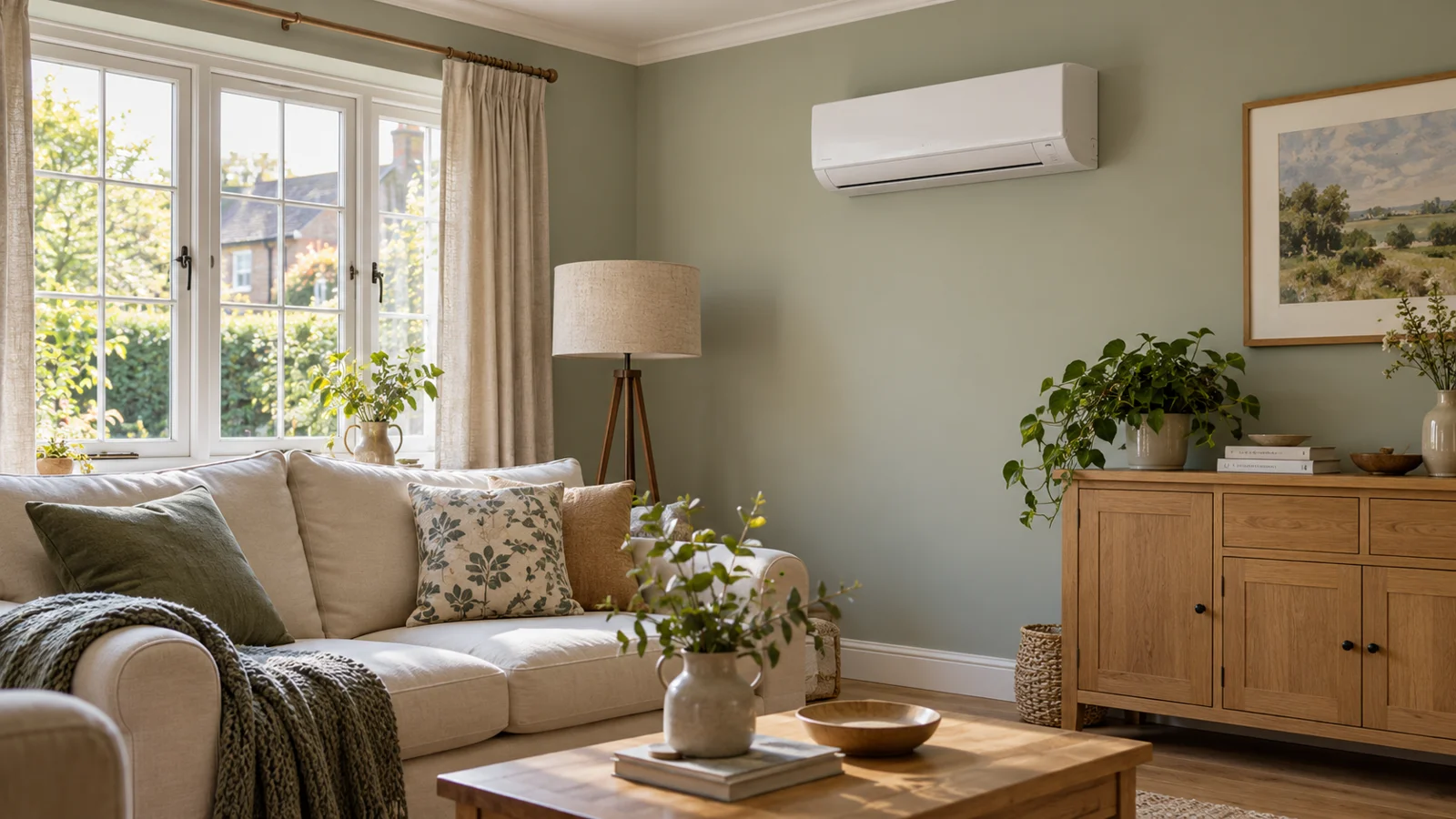
Featured image: AI-generated illustration of a British sitting room with a wall-mounted air conditioning unit.
Air conditioning not cooling: safe checks to make first
Read the controller before changing anything
Check that the system is set to cooling, with a target temperature below the room temperature. Fan-only mode circulates air without actively cooling it. A timer, sleep setting or schedule may also explain why the unit stops before you expect it to.
Look up unfamiliar symbols in the manual. On a system serving several rooms, record which indoor units are running and their selected modes. Some arrangements have limits on mixing heating and cooling; the instructions or installer can confirm how yours operates.
Give the system the start-up time specified by its manufacturer. Repeatedly switching it off and on makes the behaviour harder to assess. If a fault code appears, photograph it before changing settings and follow the manual’s instructions.
Look for blocked airflow
From floor level, check that curtains, a tall cupboard or stacked storage are not covering the indoor unit’s air inlet or outlet. A newly fitted shelf can change how air moves around the room, even when it looks neatly tucked beneath the casing.
Check accessible filters only as the manual permits. Switch the equipment off as instructed before user maintenance, and do not remove service panels. Some filters are washable; others need a different treatment or replacement. Do not assume every insert can be rinsed. Daikin’s Sensira cleaning guidance, for example, distinguishes routine user cleaning from professional servicing. Use the instructions for your own model.
If reaching the unit would mean balancing on furniture or working awkwardly at height, leave that check to the engineer. You can report weak airflow without opening anything.
Reduce heat entering the room
Close external windows and doors while cooling a room, and use suitable blinds or curtains to limit direct sunshine without obstructing the unit. A sunny glazed extension, open stairwell or frequently opened garden door can make the cooling demand very different from that in a shaded bedroom.
The Energy Saving Trust recommends blocking daytime heat and using cooler outside air when appropriate. Ventilating when it is cooler outside is a separate strategy from running air conditioning with windows open. Neither approach repairs a mechanical fault, but room conditions help explain why performance varies through the day.
What different symptoms can mean
The same symptom can have several causes. Use these observations to describe the problem, rather than to diagnose a failed component yourself.
| What you notice | Safe observation | Next step |
|---|---|---|
| Air moves but the room stays warm | Record the mode, target temperature and whether doors are open. | Seek diagnosis if cooling remains poor after permitted checks. |
| Airflow seems weaker than before | Look for furnishings blocking the inlet or outlet. | Follow model-specific filter instructions or arrange a visit. |
| Water drips from the indoor unit | Note where it appears and protect belongings without touching electrical parts. | Stop using the affected unit and ask for an assessment. |
| Ice is visible | Take a photograph from a safe position. | Stop cooling and arrange investigation; do not chip off ice. |
| One room works and another does not | Record settings and symptoms for each indoor unit. | Give the engineer both sets of observations. |
| Fault code or repeated shutdown | Copy the exact code and when it appears. | Follow the manual and avoid repeated resets. |
Could your room layout be getting in the way?
A room refresh can expose a cooling problem that was less noticeable before. Moving a desk directly into the air stream can make one seat uncomfortable while the far end of the room stays warm. Full-length curtains can overlap an outlet, and a new partition can separate the unit from the area you want to cool.
Before buying a decorative cover, boxing in pipework or placing joinery around the equipment, ask a competent installer about the manufacturer’s clearances and service access. Keep filters and service panels accessible. A cover chosen purely for appearance can obstruct airflow or make later maintenance difficult.
Where practical, move furniture rather than moving the air conditioner. Relocating fixed equipment can involve its drainage, electrical supply and refrigerant circuit, so it needs a professional plan. Our home office ideas and living room inspiration offer a starting point for rethinking how a room is used; retain the clearances specified for your particular unit.
When to call an engineer
Book an investigation if the system still fails to cool after straightforward checks, or if you notice recurring leaks, ice, unusual noise or a fault code. A service and a fault-finding visit are not necessarily the same booking: explain the symptom so the contractor can allow for diagnosis.
If there is a burning smell, smoke or water near electrical equipment, stop using the system and seek urgent appropriate help. Do not touch wet controls or wiring. Do not keep resetting a breaker that trips.
There is no need to identify the failed part before requesting air conditioning repairs. Air Conditioning Repairs UK introduces enquirers to independent contractors for existing fixed systems. Its quotation request is free, but an investigative visit may carry a fee. Confirm availability, attendance charges and the proposed scope directly with the contractor before booking.
Ask for diagnosis before agreeing to a recharge
Poor cooling alone does not establish that the system needs more refrigerant. Ask the engineer to explain the finding and, if refrigerant has been lost, how the cause will be addressed. Avoid treating repeated top-ups as a maintenance routine without an explanation of the underlying problem.
Refrigerant work requires appropriate expertise. GOV.UK sets out the qualifications for working with F gas. Ask the contractor to confirm the qualifications and any company certification required for your equipment, the proposed activity and your location. Cleaning a user-accessible filter is a different task from opening the refrigerant circuit.
Compare the remedy and its limits
A useful quotation separates investigation from repairs and explains whether parts, labour, access equipment, testing and VAT are included. Ask whether a second visit is likely, what happens if parts are unavailable and what warranty applies to the work.
For an older system, request a repair option and an explanation of any replacement recommendation. Consider the confirmed fault, condition of the remaining equipment, parts availability and disruption to decoration. Age on its own does not tell you whether a particular repair is worthwhile.
How to prepare a useful repair enquiry
You will need: a phone or notebook, any accessible system manual and previous service paperwork. These steps are for gathering information, not testing or dismantling equipment. Take photographs from floor level and leave anything inaccessible to the engineer.
- Identify the affected room and equipment. Note the room and any model details visible without moving or opening the unit. Say whether other indoor units still cool.
- Describe what changed. Record when poor cooling began, whether it is constant or intermittent, and any recent decorating, furniture moves or building work.
- Record settings and visible symptoms. Write down the operating mode, target temperature and exact fault code. Include safe photographs of leaks or ice if present.
- Explain access and repair history. Mention the outdoor unit’s location, access restrictions, previous repairs and last known service. Do not climb up to inspect it.
- Agree the visit terms. Ask about diagnostic charges, what the first visit includes, relevant credentials and whether further work requires your approval.
Frequently asked questions
Why is my air conditioner blowing air but not cooling?
It may be in fan-only mode, have restricted airflow or be struggling with room heat. A mechanical or refrigerant fault is also possible. Check permitted settings and obstructions, then request diagnosis if the problem continues.
Should I set the temperature as low as possible?
Choose a comfortable target below the current room temperature and follow the manual. An extreme setting will not resolve blocked airflow or a failed component. Record how the system behaves instead of repeatedly changing settings.
Is water outside the same as an indoor leak?
No. Water at a designed drainage outlet can be part of normal operation, depending on the system and mode. Water escaping from the indoor casing needs investigation. Describe the exact location rather than assuming every drip has the same cause.
Can a room makeover affect the cooling?
Yes. New curtains, tall furniture or partitions can obstruct airflow or change the area being cooled. Restore the manufacturer’s clearances and ask an installer before enclosing or relocating equipment.
Does requesting a quote book an emergency repair?
No. A quotation enquiry does not confirm an appointment or response time. Agree attendance, charges and the scope of any urgent visit directly with the contractor.
Give the engineer a clear starting point
Gather the symptoms, settings and access details before arranging a visit. If the simple permitted checks do not resolve the problem, use the repair enquiry linked above to describe what has changed and agree the next step with a suitable contractor.