
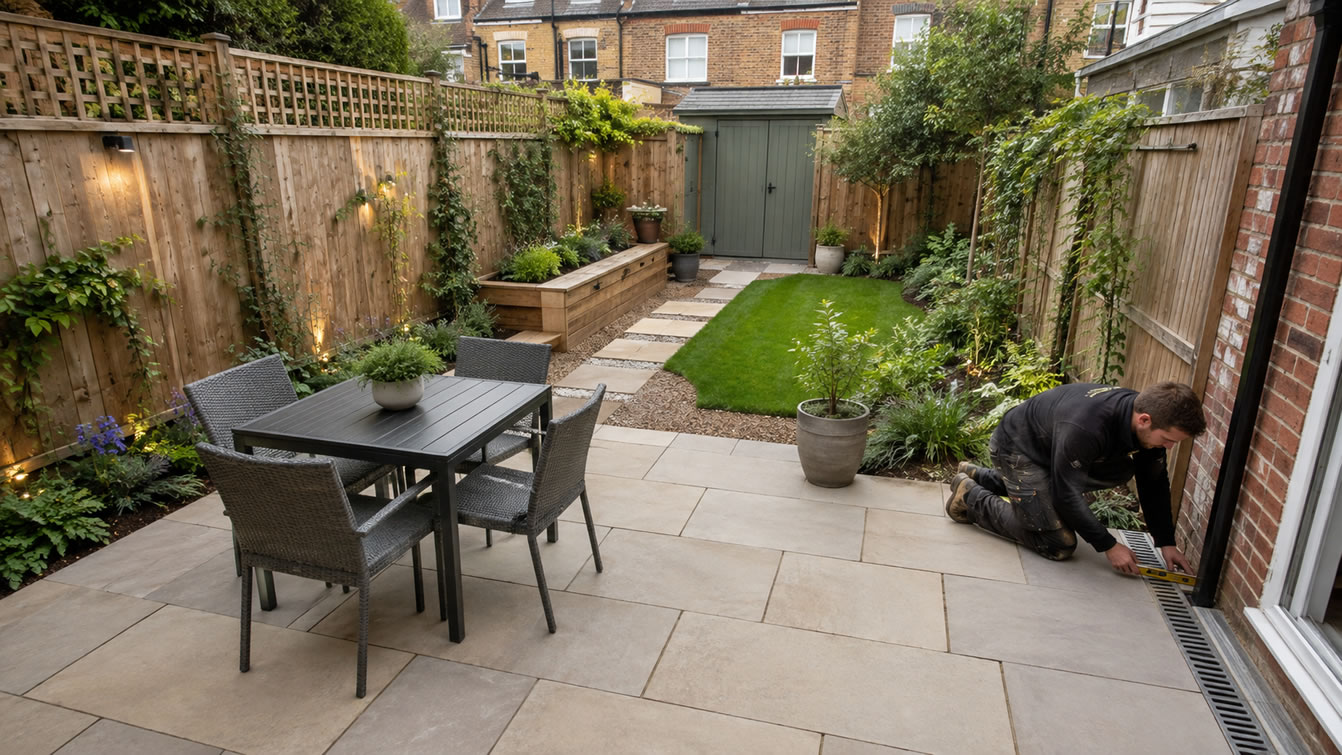
A small garden can still become a practical and attractive outdoor space. In fact, a compact plot often encourages better planning because every path, planting area and piece of furniture needs to earn its place. Patio slabs can help bring the whole design together by creating a firm surface for seating, dining and everyday use.
However, covering the entire garden with paving rarely gives the best result. A successful small garden usually combines patio slabs with planting, storage and a clear route through the space. Good drainage also matters, especially where paving sits close to the house.
Whether you have a narrow terraced garden, a compact new-build plot or a small courtyard, careful landscaping can make it feel more useful without making it feel crowded. This guide explains how to choose patio slabs, plan the layout and get more from the available space.
Patio slabs provide a level and dependable surface. Therefore, they make it easier to position a table, chairs, barbecue or storage box without furniture sinking into the lawn. They also reduce the amount of regular mowing and edging required.
In addition, paving can create structure. A clearly defined patio makes the garden look planned, while a short paved path draws the eye towards a feature at the far end. This can make a short garden appear longer.
Patio slabs offer several other advantages:
- They come in colours and finishes to suit traditional and modern homes.
- They work in gardens where a lawn may struggle because of shade or heavy use.
- Individual damaged slabs can often be lifted and replaced.
- A properly installed patio can support outdoor furniture and regular foot traffic.
- Paved areas are usually easier to keep tidy than muddy or worn grass.
Nevertheless, the base and drainage need as much attention as the visible slabs. Poor preparation may lead to movement, standing water and cracked joints.
Start by Deciding How You Want to Use the Garden
Before choosing a slab colour, think about what the garden needs to do. A patio for two people will require less room than a family dining area. Likewise, a keen gardener may prefer wider borders, while a busy household might value storage and easy maintenance.
Ask a few simple questions:
- Do you want to eat outside or mainly sit with a drink?
- Does the garden need room for children or pets?
- Where does the sun reach in the morning and evening?
- Will bins, bicycles or gardening equipment need storage?
- Does anyone need step-free access?
- Which views from the house would you like to improve or screen?
Once you know the priorities, measure the full plot. Include doors, drains, inspection covers, steps, fences and existing trees. A basic scale drawing can prevent an oversized patio from taking over the space.
Small Garden Patio Layout Ideas
The shape and position of the paving can influence how large the garden feels. Straight lines usually suit a contemporary design, whereas curved edges can soften an older or more informal garden.
| Layout idea | Works well for | Main benefit | Point to consider |
|---|---|---|---|
| Patio beside the house | Dining and easy access from the kitchen | Convenient for carrying food and furniture | Check levels and drainage near the property |
| Patio at the far end | Gardens with evening sun or a poor outlook close to the house | Creates a destination and draws the eye through the garden | A path may also be needed |
| Corner patio | Very compact plots and courtyards | Uses an awkward area efficiently | Avoid squeezing in furniture that is too large |
| Narrow paved strip | Slim terraced gardens | Leaves space for planting or a small lawn | The strip must still be wide enough to use comfortably |
| Two small paved zones | Gardens used for dining and relaxing | Gives the garden more than one purpose | Too many materials can make the design look busy |
| Stepping-slab route | Informal gardens and planted spaces | Adds access without creating a solid paved path | Slabs need stable, evenly spaced bases |
A full-width patio next to the house can work, but it may make a narrow garden look shorter. As an alternative, use a patio that is slightly narrower than the plot and add planting on one or both sides. The greenery will soften the hard edges and help the paved area feel part of the garden.
Which Patio Slabs Suit a Small Garden?
There is no single best slab for every small garden. The right option depends on the style of the property, the available budget and how much maintenance you are willing to do.
| Patio slab material | Appearance | Maintenance | Useful features for small gardens |
| Porcelain | Clean, consistent and contemporary | Generally low; regular sweeping and occasional washing | Thin joints and large formats can create an uncluttered look |
| Concrete paving | Available in many colours, textures and shapes | Moderate; some finishes may need more frequent cleaning | Offers choices for a wide range of budgets and designs |
| Indian sandstone | Natural colour variation and a traditional finish | Requires cleaning; sealing may be considered depending on the product | Each slab varies, which adds character to a simple layout |
| Limestone | Smooth, elegant and available in darker or softer shades | May need suitable sealing and careful cleaning | Can give a compact courtyard a smart, understated finish |
| Granite | Hard-wearing with a crisp or textured surface | Usually straightforward once correctly installed | Good for busy paths, steps and contemporary schemes |
| Slate | Strong colour and natural texture | Product quality and care requirements vary | Dark tones can create contrast with pale walls and green planting |
Always check that the chosen paving is intended for outdoor use. In particular, ask about slip resistance, frost resistance and the recommended installation method. Samples are helpful because colours often look different outdoors than they do in a showroom or online photograph.
Are Large Patio Slabs Suitable for a Small Garden?
Large-format patio slabs can work very well in a compact space. Fewer joint lines create a calmer surface, which can make the area look less cluttered. However, the slab size should relate to the garden dimensions. Excessive cutting around edges, posts and drains may waste material and spoil the clean effect.
Smaller slabs or setts are useful for detailed areas, tight curves and decorative borders. Even so, a complicated pattern can make a tiny patio appear busy. For many gardens, a simple laying pattern with one main slab and one edging material provides enough interest.
Laying rectangular slabs across the width of a narrow garden can make it feel wider. By contrast, lines running towards the far boundary can emphasise length. The best direction depends on which proportion you want to improve.
Choosing Colours for a Compact Patio
Pale grey, warm beige and soft buff paving can reflect more light into a shaded garden. As a result, these colours often suit enclosed plots with high fences or walls. Mid-tone slabs may prove more forgiving where muddy footprints, leaves and regular family use are expected.
Dark paving creates a strong modern look, particularly beside light render or pale fencing. However, it may show dust, water marks or pollen more readily. It can also become hot in strong sunlight, so obtain samples and see how they behave in the intended position.
Try to limit the overall palette. One paving material, one secondary edging colour and a repeated timber or metal finish usually look more coordinated than several unrelated products.
Combine Paving with Planting
Plants stop a small paved garden from feeling hard or enclosed. Fortunately, planting does not need to occupy a large amount of ground space.
Useful ideas include:
- Narrow borders beside fences or patio edges
- Climbers trained on trellis or tension wires
- Wall-mounted planters and hanging pots
- One small multi-stem tree as a focal point
- Tall, narrow pots placed in otherwise unused corners
- Herbs grown near the kitchen door
- Evergreen plants mixed with seasonal colour
Choose plants according to the light, soil and exposure rather than appearance alone. Shade-tolerant plants will cope better beside north-facing walls, while sun-loving herbs and flowers need the brighter parts of the garden.
Layering plants can also create depth. Place lower plants near the patio and taller plants behind them. Moreover, repeating the same plant in two or three places helps the design feel connected.
Make the Boundaries Work Harder
Fences and walls take up little floor area, so they offer valuable opportunities in a small garden. Trellis can support climbers, while a painted fence can provide a simple background for planting. Horizontal slats may make a narrow space feel wider, although the finish should still suit the house and neighbouring boundaries.
Built-in bench seating can also sit against a boundary. Some designs include storage below the seat, which removes the need for a separate outdoor box. Folding chairs and extendable tables offer similar flexibility when the patio needs to serve several purposes.
Mirrors sometimes appear in small garden designs because they reflect light and greenery. If you use one, position it carefully so that birds cannot mistake the reflection for an open route. It should also have a suitable outdoor fixing and weather-resistant frame.
Do Not Forget Patio Drainage
Drainage is one of the most important parts of small garden landscaping. Water should not sit against the house or run towards a neighbouring property. A patio installer will normally create a controlled fall so rainwater moves towards a safe drainage point.
Depending on the garden, the design may use a planted border, permeable area, drainage channel or another suitable system. Existing drains and inspection covers must remain accessible. In addition, paving levels should not compromise the damp-proof course or air bricks.
Do not assume that water can simply disappear into a narrow strip of soil. Heavy or compacted ground may drain slowly, especially after prolonged rain. If the plot already floods or stays wet, ask a landscaper to assess the cause before installing more hard surfacing.
Rules can differ according to the property, location and type of work. Therefore, check whether planning permission, drainage consent or other approval applies before starting, particularly for front gardens, listed buildings and properties in protected areas.
How to Plan a Small Garden with Patio Slabs
1. Measure and assess the garden
Record the garden’s length, width and level changes. Mark doors, drains, manhole covers, boundaries and permanent features. Also note sunny, shaded and waterlogged areas.
2. List the main uses
Decide whether seating, dining, planting, storage, play or easy access matters most. Rank these needs because a small plot may not accommodate every idea equally well.
3. Draw a simple layout
Sketch the patio, paths, borders and furniture to scale. Leave enough room to pull out chairs, open doors and walk around the seating area.
4. Choose suitable patio slabs
Compare outdoor-rated materials, finishes and sizes. Check slip resistance, frost resistance, maintenance needs and how the colour looks outside.
5. Plan levels and drainage
Work out how rainwater will move away from the house and where it will drain safely. Keep drains, covers, air bricks and the damp-proof course clear.
6. Prepare and lay the patio correctly
Excavate to the required depth, build a stable sub-base and lay the slabs using the method recommended for the product. Maintain consistent falls and joint widths throughout.
7. Add planting and practical features
Soften the paving with borders, pots or climbers. Then add compact furniture, storage, lighting and screening without blocking the main route.
8. Maintain the finished garden
Sweep the patio regularly, remove weeds before they establish and clean the slabs with suitable products. Check joints and drainage points so minor problems do not become larger repairs.
Small Details That Can Make the Garden Feel Bigger
The following design choices can improve the sense of space:
- Continue a similar colour from the indoor floor to the patio to create visual flow.
- Use diagonal lines carefully to lead the eye across the garden.
- Keep the main route clear rather than placing pots in every gap.
- Add one focal point at the far end, such as a bench, planter or specimen plant.
- Repeat materials instead of introducing a new finish in each area.
- Use warm, low-level lighting to highlight edges and planting after dark.
- Screen bins and utilities with a compact enclosure that matches the boundaries.
Scale matters as much as style. One well-proportioned sofa or bench may work better than several small chairs. Similarly, a single generous planter can look calmer than a collection of mismatched pots.
Common Small Garden Landscaping Mistakes
Paving every available surface
Although a fully paved garden appears low maintenance, it can feel stark and may create drainage problems. Small areas of planting or permeable material add colour and help break up the hard surface.
Choosing furniture after laying the patio
A patio may look large enough on a plan but feel cramped once chairs are pulled out. Measure the furniture first and allow usable circulation space around it.
Using too many different materials
Several slab colours, decorative stones, timber finishes and fence paints can compete for attention. A restricted palette usually makes a small garden look more settled.
Ignoring access for installation
Many terraced properties only provide access through the house or a narrow side passage. That can affect the size of machinery, waste removal and delivery arrangements. Discuss access with contractors before accepting a quote.
Underestimating the base preparation
Patio slabs need a suitable foundation. Laying them directly onto soil or a few spots of mortar often leads to rocking, sinking and uneven joints.
Forgetting future maintenance
Dense planting, very pale paving or intricate joints may require more upkeep. Choose a design that suits the time you realistically want to spend on cleaning, pruning and weeding.
Should You Lay Patio Slabs Yourself?
A competent DIYer may be able to create a small, simple paved area. The work still involves excavation, waste disposal, sub-base compaction, accurate levels, cutting and jointing. Heavy slabs also require safe handling.
Professional installation becomes more valuable where access is difficult, the garden slopes or drainage needs improvement. It may also reduce the risk of expensive mistakes with porcelain, natural stone and complex layouts.
When comparing quotes, ask each contractor to describe the preparation, sub-base, laying method, drainage and jointing product. Confirm whether waste removal, slab supply and sealing are included. A low headline figure may leave out important parts of the job.
Getting Quotes for Small Garden Landscaping and Patio Slabs
Before requesting patio slabs quotes, prepare a short brief with measurements, photographs and your preferred style. Mention access restrictions, existing drainage issues and any features that need removal. If you have chosen a slab, include the product name and size so contractors can price the same specification.
It is usually helpful to compare more than one quotation. Look beyond the total price and consider the proposed base, drainage solution, timescale, waste arrangements and workmanship guarantee. You should also ask to see examples of similar small gardens rather than only large landscaping projects.
A well-designed small garden does not need to include every possible feature. Instead, it should provide enough patio space for the way you live, while leaving room for greenery and safe drainage. With a simple layout and suitable patio slabs, even a compact plot can become a comfortable extension of the home.
Frequently Asked Questions
What are the best patio slabs for a small garden?
Porcelain, concrete and natural stone can all work well. Porcelain gives a clean, consistent appearance, while sandstone and limestone provide natural variation. The best choice depends on the garden style, budget, slip resistance and desired level of maintenance.
Do large patio slabs make a small garden look bigger?
Large slabs can make a compact patio feel less cluttered because they create fewer joint lines. However, choose a size that fits the area without requiring excessive narrow cuts around the edges.
Should I pave the whole of a small garden?
Usually, it is better to combine paving with planting or another permeable surface. This softens the design, supports drainage and creates a more attractive outlook from the house.
Can patio slabs be laid directly onto soil?
Patio slabs should normally sit on a properly prepared and compacted base with a suitable laying bed. Placing slabs directly onto soil can lead to movement, sinking and uneven surfaces.
How can I make a small paved garden feel less enclosed?
Use a limited colour palette, keep the central route clear and add vertical planting to fences or walls. Pale paving, simple furniture and one focal point can also help the garden feel more open.
Do I need drainage beneath or around a patio?
Every patio needs a plan for rainwater. The correct solution depends on the levels, soil and surrounding surfaces. It may involve a suitable fall, a channel drain, a permeable border or another approved drainage point.
Are patio slabs slippery when wet?
Some smooth products can become slippery when wet or dirty. Choose outdoor paving with suitable slip resistance and keep the surface clear of algae, leaves and grime. Ask the supplier for the relevant product information before buying.
Do I need planning permission to landscape a small garden?
Many rear-garden landscaping projects do not need planning permission, but exceptions apply. Front garden paving, drainage changes, listed buildings and protected areas may have extra rules. Check with the local planning authority when you are unsure.