
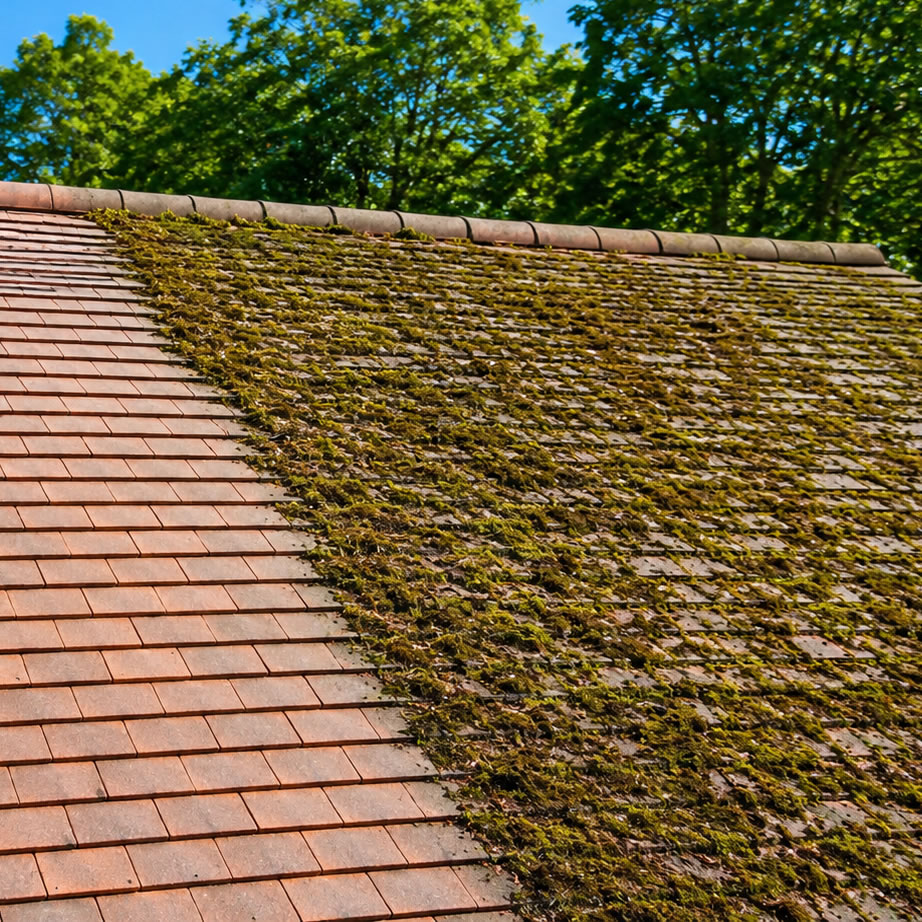
Moss is a familiar sight on British roofs, especially on shaded slopes, homes surrounded by trees and properties in areas with frequent rainfall. A small amount of growth does not always mean the roof has a problem. However, thick moss can fall into gutters, obstruct valleys, hold debris and make the roof harder to inspect.
Several roof moss removal methods are available, including manual scraping, brushing, biocide treatment, softwashing and controlled steam cleaning. Some companies also offer pressure washing, although this approach can carry a higher risk of damaging tiles or forcing water beneath the roof covering.
The right method depends on the roof material, its condition, the amount of growth and how safely contractors can reach it.
This guide explains when roof moss removal may be worthwhile, how professional cleaners carry it out, typical UK costs and the steps homeowners can take to reduce future regrowth.
Is moss on a roof always a problem?
No. Light moss or lichen can form naturally as a roof ages. In many cases, it has little effect on the roof covering.
Nevertheless, removal may become sensible when moss:
- fills gutters and downpipes
- collects in valleys
- grows heavily beneath solar panels
- falls onto paths, patios or conservatories
- hides cracked or slipped tiles
- prevents rainwater from draining properly
- holds leaves and dirt on the roof
- creates an appearance problem
- returns quickly after gutter cleaning
- interferes with roof inspection or repair work
Therefore, homeowners should base the decision on roof condition and drainage rather than appearance alone.
Why does moss grow on roof tiles?
Moss thrives where moisture remains for long periods. It also prefers surfaces that receive limited direct sunlight.
Common contributing factors include:
- north-facing roof slopes
- overhanging trees
- shaded valleys
- rough or weathered tile surfaces
- slow-draining gutters
- blocked downpipes
- debris collecting around rooflights
- shade from chimneys or solar panels
- nearby woodland
- frequent rainfall
- poor airflow around the roof
Older concrete tiles often develop a rougher surface over time. Consequently, moss can gain a stronger hold than it would on a smoother new tile.
What problems can heavy roof moss cause?
Moss does not normally eat through roof tiles. However, dense growth can contribute to other maintenance issues.
Blocked gutters
Loose moss can slide into the gutter during rain or strong wind. Once there, it can combine with leaves and silt to block outlets and downpipes.
Restricted roof drainage
Moss can collect in valleys, behind chimneys and around rooflights. As a result, rainwater may drain more slowly.
Hidden tile defects
Thick growth can conceal cracked, slipped or damaged tiles. It can also make roof inspections more difficult.
Falling debris
Dry or loose moss may fall onto paths, vehicles, extensions and conservatory roofs.
Increased moisture retention
Dense moss can keep parts of the roof surface damp for longer. This does not automatically damage the tiles, but it can encourage further organic growth and dirt accumulation.
Damage during frost
Water held within thick moss may freeze during cold weather. The moss itself may not crack a sound tile, although repeated wetting and freezing can worsen existing surface defects.
Roof moss removal methods compared
| Removal method | How it works | Main benefit | Main limitation |
|---|---|---|---|
| Manual scraping | Hand tools remove thick moss | Immediate removal with little water | Labour-intensive |
| Dry brushing | Brush clears loose residue | Simple finishing method | Can damage fragile surfaces if too aggressive |
| Biocide treatment | Chemical kills remaining growth | Helps slow regrowth | Results can take weeks or months |
| Softwashing | Low-pressure solution treats moss and algae | Less force than pressure washing | Requires careful chemical control |
| Steam cleaning | Heated water loosens growth | Reduced reliance on strong chemicals | Specialist equipment and higher cost |
| Pressure washing | High-pressure water strips growth | Fast visual result | Greater risk of tile and water-ingress damage |
| Moss vacuuming | Vacuum collects scraped material | Reduces mess and blocked gutters | Usually combined with scraping |
Manual roof moss scraping
Manual scraping remains one of the most common professional methods.
The cleaner uses shaped scrapers, poles and brushes to remove moss from the surface of individual tiles. Contractors often choose scraper heads that follow the tile profile.
Typical process
- The contractor inspects the roof and identifies fragile areas.
- They install suitable access equipment.
- They protect gutters, windows and the ground below.
- They scrape moss from the tiles.
- They collect loosened material.
- They clear valleys, gutters and outlets.
- They may apply a follow-up biocide treatment.
Advantages
Manual scraping:
- uses little water
- removes thick moss immediately
- avoids a high-pressure water jet
- allows more control around delicate areas
- creates less overspray
- works on many concrete, clay and slate roofs after assessment
Disadvantages
However, it:
- takes more time
- can cost more in labour
- may leave staining behind
- may not remove spores
- can still damage tiles if contractors use excessive force
- requires safe roof access
For many roofs, scraping followed by a treatment provides a balanced option.
Biocide treatment after scraping
After removing the bulk of the moss, a contractor may apply a biocide or fungicidal treatment.
The product targets:
- moss fragments
- algae
- lichen
- mould
- microscopic biological growth
Rain and weathering then help clear dead residue over time.
Why use a follow-up treatment?
Scraping removes visible moss, but small fragments and spores can remain. Therefore, a treatment may slow visible regrowth and improve the roof’s appearance gradually.
What homeowners should ask
Before agreeing to treatment, ask:
- which product the contractor will use
- whether it suits the roof material
- how they will protect plants
- whether they will isolate water butts
- how they will protect ponds and pets
- whether gutters need rinsing
- how long results may take
- whether another treatment may be needed
A responsible contractor should explain both the product and the runoff controls.
Biocide-only roof treatment
Where moss growth remains light, a company may recommend treatment without scraping first.
This approach causes less physical disturbance. However, it does not provide an immediate clean appearance.
Advantages
- minimal contact with the roof
- low water use
- suitable for early growth
- useful as a maintenance treatment
- often cheaper than full scraping
Limitations
- dead moss may remain visible for months
- thick growth may not release effectively
- loose material can still enter gutters
- treatment may require repetition
- garden protection remains necessary
Biocide-only treatment suits homeowners who accept gradual improvement rather than instant results.
Softwashing for roof moss
Softwashing uses a chemical cleaning solution applied through low-pressure equipment.
Contractors may use it after scraping or on roofs with light moss, algae and staining.
Benefits
Softwashing can:
- treat moss and algae at the same time
- use less physical force than pressure washing
- reach textured surfaces and tile joints
- support longer-lasting visual results
- reduce the need for heavy water use
Risks and limitations
Nevertheless:
- incorrect chemical strength can damage surrounding surfaces
- runoff may affect plants and ponds
- some metal components may react to unsuitable chemicals
- it cannot repair broken tiles
- it may not remove thick moss without scraping first
Ask the company to define what it means by “softwash”. Some contractors use the term for any chemical clean, even where the equipment or method differs significantly.
Steam cleaning
Steam cleaning combines hot water with controlled pressure.
The heat helps loosen moss, algae and dirt while the operator uses less force than many conventional pressure-washing systems.
Possible advantages
- faster visual improvement
- reduced chemical use
- useful on selected sound tiles
- effective on organic staining
- less aggressive than some pressure washing
Possible disadvantages
- higher cost
- specialist machinery required
- water still enters the work area
- fragile tiles may not tolerate the process
- lichen marks can remain
- access and setup take time
A roof cleaner should inspect the tiles and roof details before recommending steam cleaning.
Pressure washing roof moss
Pressure washing can remove moss quickly. However, it is not the right choice for every roof.
A concentrated water jet can:
- crack brittle tiles
- strip surface coatings
- disturb mortar
- loosen flashing
- drive water beneath tile laps
- spray dirty water onto neighbouring properties
- wash moss directly into gutters
- damage older artificial tiles
- expose existing roof defects
When might a contractor consider it?
Controlled pressure washing may suit a limited number of robust roofs where:
- the tiles remain in good condition
- the manufacturer allows washing
- the contractor uses reduced pressure
- the spray follows the roof slope
- damaged tiles receive repairs first
- the company contains debris and runoff
Even then, homeowners should ask why scraping or softwashing would not provide a safer alternative.
Can pressure washing make roof tiles porous?
The claim that pressure washing always makes tiles porous oversimplifies the issue. However, aggressive washing can remove weathered surface material or coatings from some tile types.
More importantly, poor technique may damage edges, mortar and laps. It can also force water into the roof.
Therefore, the decision should depend on the specific tile, its age and the manufacturer’s recommendations.
Roof moss removal on concrete tiles
Concrete roof tiles commonly develop moss because their surface becomes rougher with age.
Suitable options may include:
- manual scraping
- brushing
- biocide treatment
- softwashing
- controlled steam cleaning
Pressure washing requires particular care because it may remove surface coatings or expose pre-existing deterioration.
Roof moss removal on clay tiles
Clay tiles can become brittle as they age. Some also have delicate surface finishes.
Consequently, gentler methods often suit them better, including:
- careful hand scraping
- soft brushes
- low-pressure treatment
- biocide application
- specialist cleaning after inspection
Aggressive pressure washing can chip or crack fragile clay tiles.
Roof moss removal on natural slate
Natural slate needs careful handling. Slate can crack, delaminate or slip when contractors place weight in the wrong area.
A slate roof may require:
- experienced access
- lightweight tools
- limited manual removal
- carefully selected treatment
- inspection of fixings and slipped slates
A general exterior cleaner may not have the roofing knowledge needed for an older slate roof.
Roof moss removal on artificial slate
Artificial slates vary by age and manufacturer. Some have surface coatings that aggressive cleaning can damage.
Older artificial slate may also contain asbestos. Therefore, work should stop where anyone suspects asbestos-containing material.
Contractors should not pressure wash, sand, scrape aggressively or disturb a suspected asbestos roof.
Moss around solar panels
Solar panels create shade and shelter. Consequently, moss can grow around panel edges or beneath the array.
Cleaning companies should consider:
- electrical risks
- cable positions
- panel brackets
- limited access
- water entering beneath panels
- blocked drainage below the array
A roof cleaner should not disconnect or move solar panels unless they have the required competence.
Moss in roof valleys
Valleys carry large volumes of rainwater. Therefore, moss and debris in these areas can create more concern than light growth on an open roof slope.
Blocked valleys may cause water to:
- overflow beneath tiles
- spread sideways
- collect behind debris
- enter roof junctions
- overwhelm nearby gutters
Valley clearance should form part of the quotation where growth affects drainage.
Should moss be removed from gutters too?
Yes. Moss removal from the tiles can move a substantial amount of debris into the rainwater system.
A complete service should address:
- gutters
- downpipes
- outlets
- valleys
- flat-roof drainage points
- conservatory gutters
- ground-level cleanup
Ask whether the contractor will test downpipes after clearing them.
Roof moss removal costs in the UK
Prices depend on roof size, access, pitch, growth level and method.
| Roof moss removal service | Broad UK budgeting range |
| Small local moss clearance | £200–£500 |
| Bungalow roof scrape | £500–£1,000 |
| Typical terraced or semi-detached house | £700–£1,500 |
| Larger detached house | £1,200–£2,500+ |
| Biocide-only treatment | £250–£800+ |
| Scrape and biocide treatment | £700–£2,000+ |
| Steam cleaning | £800–£2,500+ |
| Scaffolding or specialist access | £500–£2,000+ |
| Gutter clearance | £75–£300+ |
These figures provide general planning guidance. Difficult access can make a smaller roof more expensive than a large, easily reached bungalow.
What affects the price?
Contractors usually consider:
- total roof area
- roof pitch
- number of storeys
- depth of moss
- tile or slate type
- dormers and valleys
- rooflights
- solar panels
- conservatories below the eaves
- narrow access
- scaffolding
- treatment products
- gutter clearing
- waste removal
- regional labour rates
How long does roof moss removal take?
| Property or service | Typical duration |
| Small garage or porch roof | Several hours to one day |
| Bungalow | One to two days |
| Terraced or semi-detached house | One to three days |
| Larger detached house | Two to five days |
| Complex roof with scaffolding | Three to seven days |
| Biocide-only application | Often one day |
| Gradual visual improvement | Several weeks or months |
Weather can delay the work, especially where the contractor plans to apply treatment.
How long before moss returns?
No treatment prevents moss forever.
Regrowth depends on:
- shade
- tree cover
- roof direction
- local rainfall
- tile texture
- blocked gutters
- roof pitch
- nearby vegetation
- treatment quality
- maintenance
A sunny roof with little tree cover may stay clear for longer than a shaded north-facing roof.
How to slow roof moss regrowth
Keep gutters clear
Blocked gutters hold moisture around the lower roof edge and allow moss debris to accumulate.
Trim suitable overhanging branches
Reducing shade and falling leaves can help the roof dry faster. However, homeowners should use a suitable tree specialist for large or protected trees.
Clear valleys
Leaves and moss collect easily in valleys. Regular checks help maintain water flow.
Use maintenance treatments
A contractor may recommend periodic low-pressure treatment before heavy moss returns.
Improve nearby drainage
Leaking gutters and overflowing downpipes can keep roof edges and walls damp.
Check beneath solar panels
Shaded areas may need more frequent inspection.
Avoid unnecessary roof traffic
Foot traffic can break tiles and create places where dirt and moisture gather.
Are copper or zinc strips effective?
Some homeowners install copper or zinc strips near ridges. Rainwater running over the metal carries trace ions down the roof, which may inhibit biological growth.
Results vary according to:
- roof pitch
- rainfall
- roof shape
- strip position
- tile type
- roof size
Metal strips may reduce regrowth, but they do not remove existing thick moss. They may also create staining or compatibility concerns, so a roofing professional should assess the roof first.
Can homeowners remove roof moss themselves?
Cleaning a small, low outbuilding may look straightforward. However, pitched roofs create significant fall risks.
Homeowners should avoid:
- walking on moss-covered tiles
- working from an unsecured ladder
- using a pressure washer from roof level
- spraying chemicals without runoff control
- climbing above conservatories
- disturbing possible asbestos materials
- scraping natural slate without experience
Ground-level observation and low gutter maintenance may be reasonable where safe. Nevertheless, professional equipment and training usually make full roof moss removal the better option.
Roof moss removal safety
Moss becomes extremely slippery when wet. Moreover, roof tiles can break under concentrated weight.
A competent company may use:
- scaffolding
- mobile towers
- roof ladders
- edge protection
- mobile elevating work platforms
- fall-restraint equipment
- telescopic ground-based tools
Ask the contractor to explain how workers will reach all areas safely.
Could roof moss removal reveal repairs?
Yes. Once contractors remove the moss, they may uncover:
- cracked tiles
- slipped slates
- failed ridge mortar
- loose flashing
- damaged valleys
- blocked gutters
- broken clips
- previous patch repairs
The quotation should explain how the company will handle minor damage.
For example, ask whether the price includes:
- replacing a small number of tiles
- reseating slipped tiles
- clearing gutters
- removing waste
- cleaning walls and windows
- photographing defects
Comparing roof moss removal quotes
| Quote item | Company A | Company B | Company C |
| Roof material identified | |||
| Roof inspected first | |||
| Moss removal method | |||
| Safe access method | |||
| Manual scraping included | |||
| Biocide treatment included | |||
| Product identified | |||
| Garden protection | |||
| Solar panels considered | |||
| Valleys cleared | |||
| Gutters cleared | |||
| Downpipes checked | |||
| Minor tile repairs | |||
| Waste removal | |||
| Insurance confirmed | |||
| VAT included | |||
| Total price |
Questions to ask a roof cleaning company
- Does the roof need complete moss removal?
- Which roof material do I have?
- Will you scrape, softwash or pressure wash?
- Why does that method suit the roof?
- What access equipment will you use?
- Will you walk directly on the tiles?
- Which treatment product will you apply?
- How will you protect plants, ponds and pets?
- Will you clear valleys and gutters?
- Will you test the downpipes?
- What happens if you find broken tiles?
- Will you protect solar panels and cables?
- Do you hold public liability insurance?
- Does the price include waste removal?
- Is VAT included?
Warning signs of a poor roof moss removal offer
Be cautious where a company:
- recommends pressure washing without inspecting the roof
- claims moss always destroys tiles
- promises permanent moss prevention
- cannot identify the roof material
- plans to work from an unsecured ladder
- ignores gutters and downpipes
- cannot identify the treatment product
- offers roof painting automatically
- does not discuss neighbouring property
- asks for immediate payment
- provides no written quotation
- cannot explain its insurance
Is roof coating necessary after moss removal?
Usually, no. Cleaning and coating are separate services.
Some companies offer tile painting or sealing after moss removal. However, homeowners should ask:
- why the roof needs coating
- whether the tile manufacturer approves it
- whether the tiles already have a suitable surface finish
- how the coating affects water flow between laps
- what preparation the contractor will carry out
- whether the guarantee has exclusions
- whether future repairs will become harder
A clean roof does not automatically need paint.
Request roof moss removal quotes
When requesting quotes, include:
- property type
- number of storeys
- approximate roof size
- tile or slate type, if known
- amount of moss
- blocked gutters or valleys
- solar panels
- rooflights and dormers
- conservatories below the roof
- narrow access
- safe ground-level photographs
Find Me Quotes can help homeowners compare quotations from local roof and gutter cleaning specialists.
By comparing several written quotes, you can review the removal method, safety arrangements, follow-up treatment, gutter clearance and cleanup included in each price.
Frequently asked questions about roof moss removal
Does roof moss need to be removed?
Not always. Light moss may cause no immediate problem. Removal becomes more worthwhile where growth blocks drainage, falls into gutters, conceals tile damage or creates a significant appearance issue.
What is the safest method for removing roof moss?
The safest method depends on the roof covering. Careful manual scraping followed by a suitable low-pressure treatment often provides a gentler option than pressure washing.
Can pressure washing damage roof tiles?
Yes. Excessive pressure can crack tiles, remove surface coatings, disturb mortar and force water beneath tile laps. It should not be used automatically on every roof.
Does biocide stop moss growing back?
Biocide can slow regrowth by treating remaining biological material. However, it cannot prevent moss permanently, especially on shaded roofs surrounded by trees.
How much does roof moss removal cost?
A typical terraced or semi-detached house may cost around £700–£1,500, while larger or difficult roofs may cost £1,200–£2,500 or more. Access and scaffolding can significantly affect the price.
How long does moss treatment take to work?
A chemical treatment may begin working quickly, although visible improvement can continue for several weeks or months as weather releases the dead growth.
Should gutters be cleared after moss removal?
Yes. Loose moss can block gutters, valleys and downpipes. A complete service should include debris removal and rainwater-system clearance.
How often should moss be removed?
There is no fixed interval. Homeowners should monitor drainage and arrange treatment when growth becomes heavy or starts affecting gutters and valleys.