

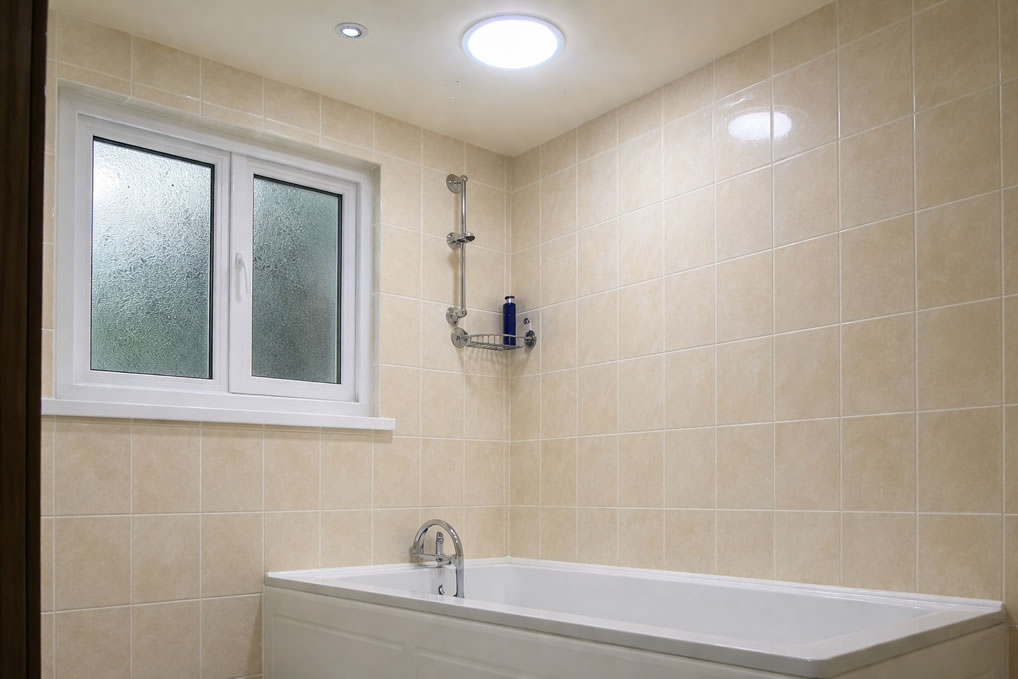
A dark bathroom is one of the most common “we hate this room” complaints in UK homes — especially in terraced houses, extensions, and internal bathrooms with no external wall for a window.
A sun tunnel (also called a light tube or solar tube) is often the simplest way to bring in natural light without the cost and disruption of a full roof window. But bathrooms come with one big catch:
steam + cold surfaces = condensation.
This guide focuses specifically on using a sun tunnel in a bathroom: what works best, what to avoid, how to prevent condensation, and what it costs.
Do sun tunnels work in bathrooms?
Yes — bathrooms are one of the best use-cases because you typically want light, not a view. Many sun tunnel guides list bathrooms as a prime room for them.
Some systems even offer bathroom ventilation add-ons, combining daylighting with moisture extraction.
Choosing the right sun tunnel for a bathroom
Pick the right tube type: rigid vs flexible
- Rigid tunnels usually give the brightest, cleanest light (especially with longer runs).
- Flexible tunnels are easier to route around obstructions but can reduce light output, especially with bends.
Diameter matters
Bigger diameter = more light, generally. Your installer will advise based on roof type and room size.
Roof type: pitched vs flat
- Pitched roofs are often more straightforward.
- Flat roof versions can cost more due to detailing and waterproofing.
A UK cost guide notes average sun tunnel install costs (with higher-end pricing often linked to rigid/flat-roof setups).
Ventilation: the #1 thing that makes or breaks a bathroom sun tunnel
A sun tunnel adds light, but it doesn’t automatically solve steam problems. Bathrooms still need adequate ventilation.
Planning Portal notes that a room served by a rooflight needs to be ventilated, and ventilation can be achieved through the rooflight for rapid/background venting (where applicable).
For bathrooms specifically, you’ll often still rely on an extractor fan.
Best practice for bathrooms
- Use a good extractor fan (and actually use it).
- Keep the bathroom door closed during showers, then vent afterwards.
- If you regularly get condensation, consider improving mechanical extraction (fan upgrade, better ducting).
VELUX also notes condensation is often about excess moisture in the room and improving ventilation/air circulation helps reduce it.
Can you combine a sun tunnel with extraction?
Often, yes:
- Some systems market a dedicated bathroom ventilation kit.
- VELUX describes an option to integrate ventilation using a manifold connected to a third-party extractor and ducting.
Condensation: how to avoid the “dripping diffuser” problem
Condensation in a bathroom sun tunnel usually happens because warm moist air rises and meets a colder surface.
Signs it’s condensation (not a leak)
- Moisture appears after showers, especially in cold weather
- Droplets form on/inside the diffuser
- No clear link to rainfall
VELUX support articles specifically address condensation on sun tunnels and steps to reduce it (including allowing moisture to disperse and improving room conditions).
Ways installers reduce condensation risk
- Insulating the tunnel section through cold loft space (where appropriate)
- Proper air sealing around the ceiling ring/diffuser
- Ensuring the bathroom ventilation is adequate
Common bathroom sun tunnel problems (and what causes them)
1) Leak around the roof unit
Usually flashing/detailing or a disturbed tile/slate around the unit. Planning Portal highlights the importance of weatherproofing at the roof junction and mentions proprietary kits/flashing.
2) Dull light output
Often caused by:
- too many bends
- long run
- shading at roof level
3) Condensation at the diffuser
Usually humidity/ventilation related (see above).
Typical UK costs for a bathroom sun tunnel (2026)
Real-world costs depend on roof type, access, tube length, and finishing.
Useful UK guide ranges:
- Checkatrade gives a typical “total cost” example around £725 (product + installation averages).
- MyBuilder reports a wider average range of £600–£1,900 depending on complexity.
- MyJobQuote (Jan 2026) suggests £520–£710 average, with higher costs for rigid/flat roof cases.
If you’re adding ventilation integration, expect the quote to reflect that extra work.
What to ask when getting quotes (copy/paste)
- “Is this a rigid or flexible tunnel, and what length/bends are expected?”
- “What flashing/roof kit is included for my roof covering?”
- “How will you manage condensation risk in a bathroom?”
- “Can the system integrate with extraction / do you offer a ventilation add-on?”
- “What’s included in making good (ceiling finish, trims) and what guarantee applies?”
FAQs
Are sun tunnels good for bathrooms?
Yes — bathrooms are a common target room for sun tunnels because you want daylight without needing a view.
Will a sun tunnel cause condensation in a bathroom?
It can if humidity is high and ventilation is poor. Condensation is usually about excess moisture in the room and warm moist air rising; improving ventilation reduces risk.
Can I add an extractor fan with a sun tunnel?
Some systems offer ventilation kits or integration options, including add-ons marketed for bathrooms and manufacturer guidance on connecting to third-party extraction.
How much does a bathroom sun tunnel cost in the UK?
Costs vary by roof type, access, and complexity. UK guides often show ranges from the mid-hundreds to around £1,900 for more complex installs.