
When your roof is leaking, it’s easy to panic and accept the first person who answers the phone. That’s also exactly when rogue traders and “sealant-only” repairs make the most money.
This guide helps you do two things:
- get the leak stopped quickly, safely, and
- avoid paying twice for the same leak.
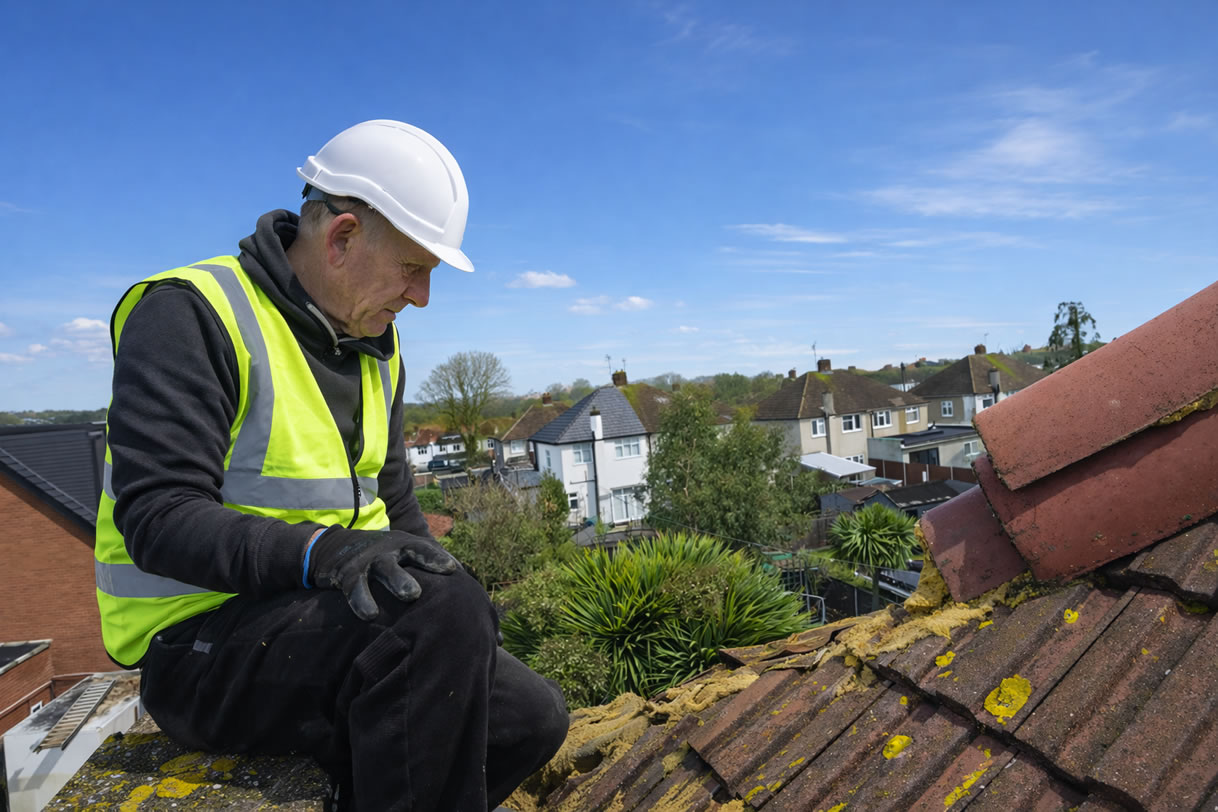
HSE is blunt about roof work: it’s high risk even for short jobs and needs proper precautions. So as a homeowner, don’t climb on the roof—focus on documenting the issue and choosing the right roofer.
Step 1: Do the safe “damage control” inside first
- Catch drips (bucket + towels), move electrics and valuables.
- If water is near lights/sockets, switch off the affected circuit if safe.
- Take photos of staining/drips and note when it happens (heavy rain only? wind direction? after gutters overflow?).
This speeds up diagnosis and helps you get more accurate quotes.
Step 2: Where to find roofers you can verify
Use at least two sources:
Trade bodies and quality schemes (good starting point)
- NFRC provides homeowner guidance and a “find a roofer” route via members.
- TrustMark is a government-endorsed scheme with a “find a tradesperson” tool and advice (including using written contracts).
General consumer advice
Citizens Advice suggests using your local council, recommendation schemes, and trade associations when finding a trader you can trust.
Also use local recommendations (neighbours/groups) where you can see the work.
Step 3: Get 2–3 roofers to assess it (even for a leak)
NFRC’s homeowner guidance points people toward comparing contractors and quotes, not automatically choosing the cheapest.
A decent roofer will:
- ask when it leaks and how long it’s been happening
- talk about likely sources (flashing, valleys, ridge, abutments, rooflights)
- explain repair options clearly
Step 4: The 10 checks that matter for leaking-roof jobs
1) They explain the cause, not just the symptom
“Tile slipped” is a symptom. The cause might be fixings, underlay, flashing, or poor detailing.
2) You get a written scope
Must include: what they’re repairing, materials, access/scaffold, waste removal, timescale, VAT.
3) They’re not selling “seal it” as the whole fix
Mastic-only repairs often fail because the leak is at a junction/detail.
4) They show you evidence (photos)
Before/after photos are normal on roofing because you can’t see the work.
5) Access is safe and realistic
If it’s a chimney/valley/steep pitch, safe access matters more than shaving £50 off the quote.
6) Insurance is easy to confirm
Ask for public liability (and employer’s liability if they have staff).
7) Deposit and payments are sensible
Avoid large upfront payments for “urgent” leaks. Prefer staged payments for larger scopes.
8) They’re clear on guarantees
What’s covered (materials/labour), how long, and exclusions in writing.
9) Their identity matches reviews
Business name, phone number, and branding should line up.
10) They communicate well
If they’re vague, late, or pushy before the job, it rarely improves mid-job.
The 7 questions to ask a roofer (copy/paste)
- “Where do you think the water is getting in, and what evidence supports that?”
- “What’s the smallest proper repair, and what’s the best long-term option?”
- “Will you need to lift tiles/slates to repair the detail properly?”
- “What access is included in the quote (ladder/tower/scaffold)?”
- “What guarantee do I get, and what paperwork?”
- “If you uncover damaged battens/underlay, how will costs be agreed?”
- “Can you share photos of similar repairs you’ve done?”
Red flags (walk away)
- Pressure selling or “cash only today”
- No written quote/scope
- Refuses to show insurance
- “We don’t need to look—this always needs a new roof”
- Only solution is a smear of sealant
- Suggests you climb up to “have a look” (roof work is dangerous)
If you’ve already been scammed or the repair failed
Citizens Advice has guidance on dealing with problems with home improvements and your consumer rights (repairs/refunds depend on circumstances).
If you suspect criminal/rogue trading behaviour, Citizens Advice also explains how reporting to Trading Standards works through their consumer service.
FAQs
Should I go on the roof to check the leak?
No. HSE states roof work is highly dangerous even for short jobs and needs proper precautions.
Where can I find a roofer I can verify?
NFRC and TrustMark both provide ways to find tradespeople/roofers and include homeowner guidance on choosing contractors.
How many quotes should I get for a leaking roof?
Usually 2–3. Compare the scope and method, not just the price. NFRC guidance for homeowners supports comparing contractors rather than automatically choosing the cheapest.